PARTING AND GROOVING HOLDERS About
Parting and grooving methods

Parting
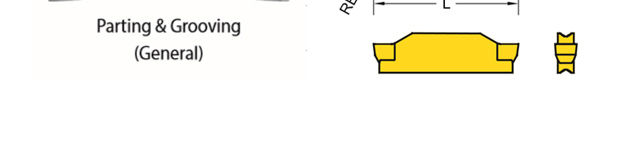
When parting, bar components are parted off. This method is used particularly often for mass production.
Grooving
When grooving, grooves are produced in the component; this can happen both radially as well as axially.
Parting, grooving and turning
For the production of very wide and shallow grooves, the longitudinal turning method is the most often used, as it saves valuable time and, as a result, also costs.
Profile grooving
With profile grooving, a special profile is produced using a radius insert.
Deep grooving
In order to produce very deep grooves, when applying this method, a blade is most commonly used.
Types

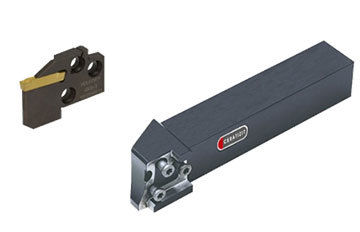
Modular parting and grooving system
- Same interface for parting, grooving, and threading modules
- Suited for varied uses
- Expandable with new modules
- Exchangeable cutting insert in case of damage
- Very precise and stable connection

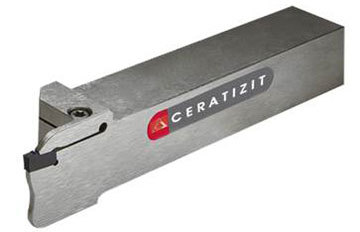
Monobloc tool
- High stability, as the tool holder is made out of one piece
- Particularly suited for mass production
- Clamping screws accessible from the top and bottom

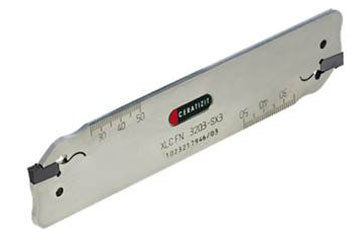
Block/blade solution
- Overhang can be flexibly adjusted
- Very deep grooves possible
- Two insert seats per blade
Unmatched Precision for Turning ApplicationsExperience high cutting force and accuracy with our parting and grooving tool holders, purpose-built for external grooving and parting off on a variety of lathes. Their rigid construction and reliable clamping deliver stability, even under demanding machining conditions. Compatible with a broad range of ISO inserts, these holders support versatile bar stock and tubing applications, optimizing productivity for Austrian distributors, service providers, and wholesalers.
Flexible Mounting and CustomizationChoose from square or round shank mounting options, allowing seamless integration into CNC, automatic, or manual lathes. Our holders are available in rectangular or custom shapes, with diameters suitable for insert widths from 2mm to 6mm, and lengths tailored to your requirements. The durable alloy steel or carbide constructionup to 60 HRC hardnessensures long-lasting performance, while coated or uncoated finishes meet specific operational demands.
FAQs of PARTING AND GROOVING HOLDERS:
Q: How are these parting and grooving holders mounted on machines?
A: The holders feature shank mounting optionseither square or roundand are designed for seamless installation on CNC, automatic, or manual lathes used in turning operations.
Q: What cutting insert compatibility do these holders offer?
A: They are fully compatible with standard ISO grooving and parting inserts, allowing for efficient use of industry-standard tooling and flexibility in sizing from approximately 2mm to 6mm widths.
Q: When should I use internal versus external coolant supply?
A: Use internal coolant supply for enhanced cooling efficiency, especially during high-speed or high-precision cutting. External coolant is suitable for less demanding jobs or when internal supply is unavailable, helping reduce tool wear and improve chip evacuation.
Q: Where can I source these tool holders in Austria?
A: These parting and grooving holders are available through local distributors, service providers, suppliers, traders, and wholesalers across Austria, with packaging options including individual plastic boxes or cartons for secure delivery.
Q: What is the process for selecting the right holder for my application?
A: Consider your machine type, insert size, required cutting capacity, shank shape, and whether you need coated or uncoated finishes. Our team can advise on customization for specific turning, grooving, or parting operations.
Q: What usage benefits do these holders provide?
A: You gain high cutting accuracy, precise and rigid clamping, and reliable corrosion resistance. This results in improved overall tool life, operational stability, and consistent performance during external grooving or parting off on a range of lathe machines.
Q: How does surface finish affect corrosion resistance and longevity?
A: Black oxide and polished finishes are available, offering varying degrees of corrosion resistance. Choosing the appropriate finish enhances protection against wear, extending holder durability, especially in demanding machining environments.





 Send Inquiry


 Send Inquiry